Since ancestral times, Indigenous peoples of the Amazon and other tropical forests have woven their lives in deep relationship with the forest. From it come food, medicine, knowledge, spirituality, and a sense of community. To care for this relationship, they built forms of organization based on reciprocity, balance, and respect for the territory.
Within this web of life, Indigenous women have held an essential place. They have been caretakers of the chacras—traditional Amazonian polyculture systems—along with seeds, food, health, child-rearing, and the transmission of knowledge. Their role has not been secondary; it has been central to sustaining family, community, and cultural life.
With colonization and the imposition of external models, that balance gradually began to break. Extractive economies, certain religious structures, and patriarchal systems progressively reduced women’s participation in decision-making spaces. Even so, their strength never disappeared.
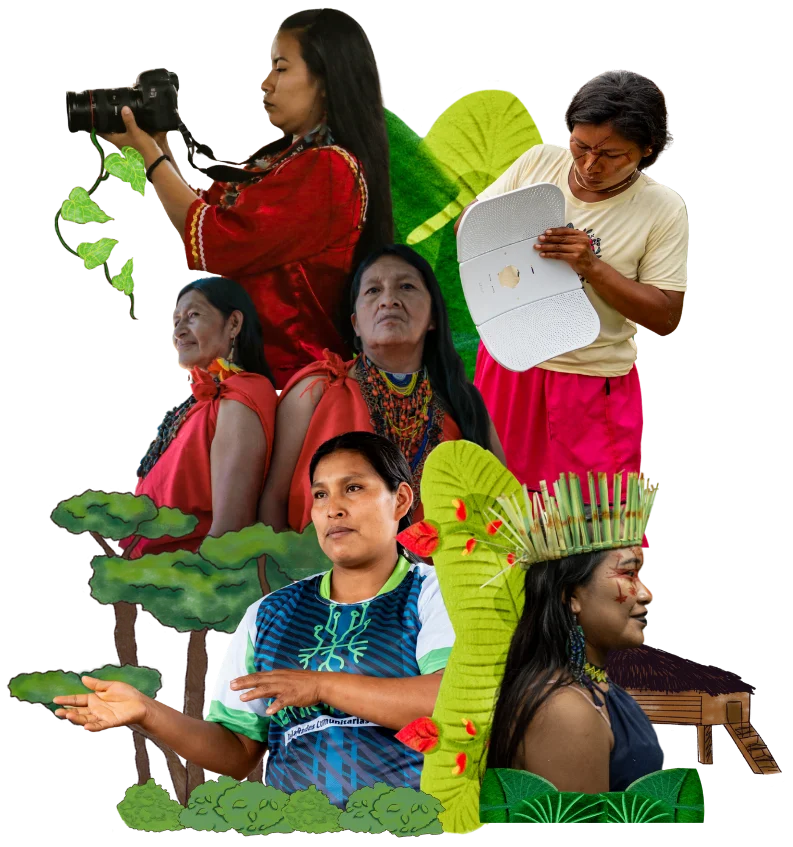
Today, in the Amazon and other tropical forests, Indigenous women are reclaiming the place that belongs to them: at the forefront of the defense of territory, culture, and life. Guided by the memory of grandmothers and the drive of new generations, they lead processes of conservation, governance, connectivity, education, and community care.
For this reason, CEFO works primarily with women’s associations and intergenerational networks linked to traditional crafts, medicinal plants, and the transmission of knowledge. These structures also provide a strong foundation for our community connectivity model, allowing technology to take root in organizations that already have trust, leadership, and a strong territorial presence.
Connectivity strengthens their training and organizational processes, facilitates exchange between communities, creates new opportunities to access markets directly and promote their products, and supports the digital safety and well-being of children and young people.Strengthening Indigenous women means strengthening the networks that sustain culture, family economies, territory, and the future of their communities.
Learn more about the women’s associations we work with and how they are part of CEFO’s community connectivity model.
We invite you to discover these voices and paths, which today inspire new ways of protecting forests and strengthening their cultures.