Beyond borders: building unity, connectivity, and territorial defense
The Center for the Strengthening of Indigenous Peoples’ Rights (CEFO) continues to strengthen its binational presence between Ecuador and Peru, promoting meaningful connectivity processes that reinforce Indigenous governance, territorial defense, and coordination among peoples who have historically shared the same territory, culture, and vision of life, despite the borders imposed by States.
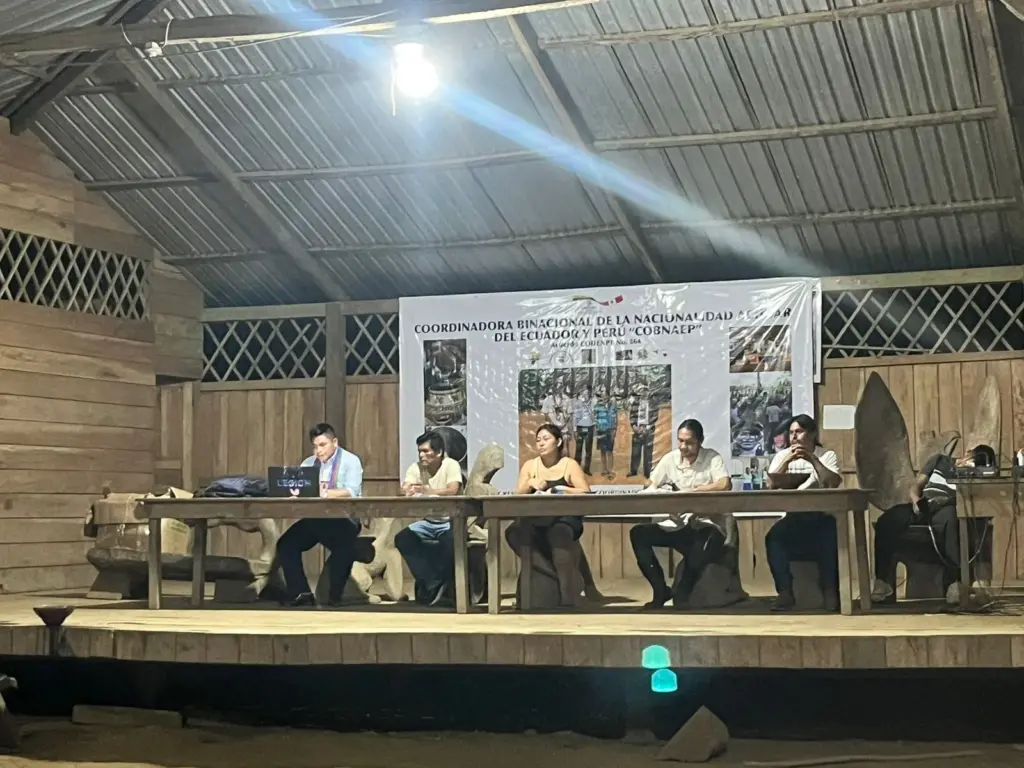
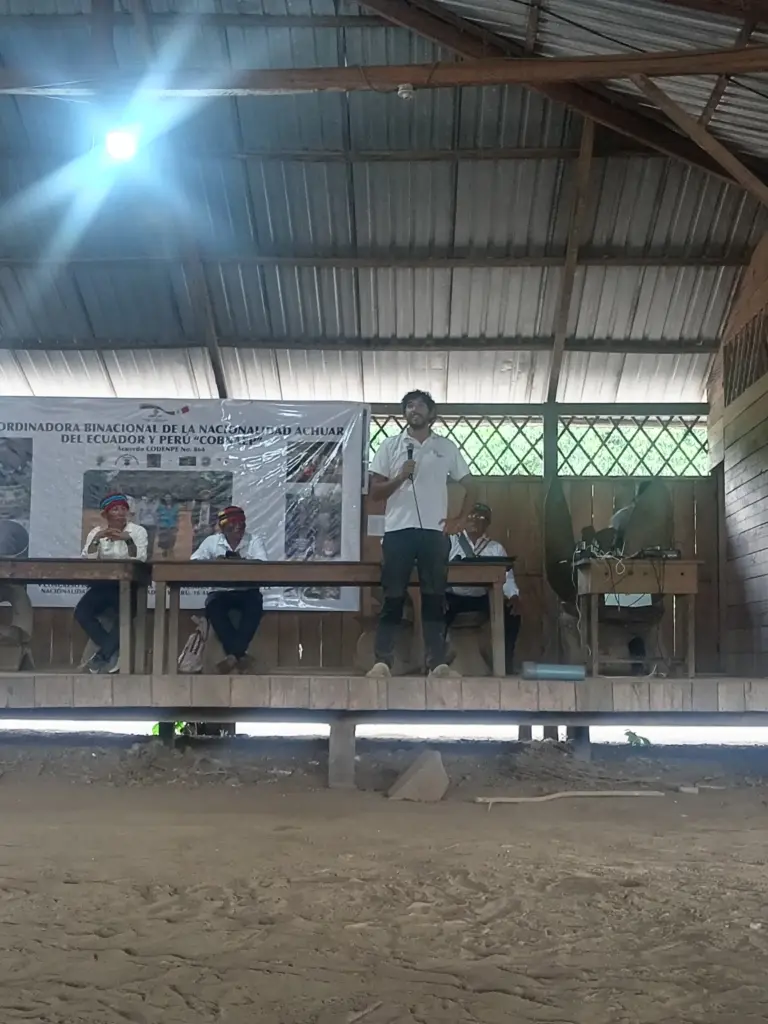
In this context, CEFO participated as a special guest in the Binational Congress of the Binational Coordinating Body of the Achuar Nationality of Ecuador and Peru (COBNAEP). This gathering served as a space for dialogue and decision-making, where leaders, women leaders, authorities of the Achuar Nationality, and allied organizations reflected on the current challenges facing Achuar territory and defined joint strategies to strengthen unity among communities in both countries.
COBNAEP is an important mechanism for the integration of the Achuar people, created to strengthen cultural, family, and territorial ties among communities in Ecuador and Peru. It promotes the defense of collective rights and the coordination of binational actions for the protection of their ancestral territory.
During the congress, the new COBNAEP board was elected, reaffirming the commitment of Achuar organizations to self-governance, community participation, and consensus-building in order to address the challenges affecting their territories.
Meaningful connectivity to strengthen community life
For CEFO, connectivity is not limited to internet access. Meaningful connectivity means that communities can use digital tools to strengthen their own organizational, cultural, and governance processes.
For this reason, the gathering highlighted the importance of developing community internet networks that can improve communication among communities, facilitate the coordination of collective actions, strengthen territorial information systems, and expand opportunities for women, youth, and community leaders.
The lack of connectivity remains one of the main barriers to strengthening Indigenous governance in remote Amazonian territories. However, community-based technologies represent an opportunity to reduce these gaps and strengthen the autonomy of Indigenous peoples.
Women and leadership for the future of the territory
Another priority topic addressed during the congress was the strengthening of Achuar women’s associations. Women leaders play a fundamental role in the transmission of knowledge, cultural preservation, the protection of natural resources, and the development of sustainable economic alternatives for their communities.
CEFO reaffirmed its commitment to continue supporting initiatives that strengthen women’s participation in decision-making spaces and promote their access to communication, training, and leadership tools.
Commitments for a shared agenda
The three days of work helped consolidate agreements and strengthen relationships among Indigenous organizations on both sides of the border. CEFO reaffirmed its commitment to continue coordinating actions with the Achuar Nationality of Ecuador (NAE), COBNAEP, the Federation of the Achuar Nationality of Peru (FENAP), and other allied organizations to promote training processes, community connectivity, territorial governance, and the defense of collective rights.
The gathering also made it possible to build new cooperation ties with Indigenous organizations, international cooperation actors, and strategic allies interested in accompanying initiatives led from the territories.
The experience of the Binational Congress shows that the unity of the Achuar people transcends national borders. By strengthening their organizations, defending their territory, and accessing tools for meaningful connectivity, communities continue to build a future based on autonomy, cooperation, and respect for their cultural identity.
From CEFO, we will continue accompanying these processes, convinced that community connectivity and organizational strengthening are fundamental pillars for the protection of the Amazon and the full exercise of Indigenous peoples’ rights.